Monday · Open until 8 p.m. · Iberville and Saint-Jean
FrançaisWhat is dental tartar?
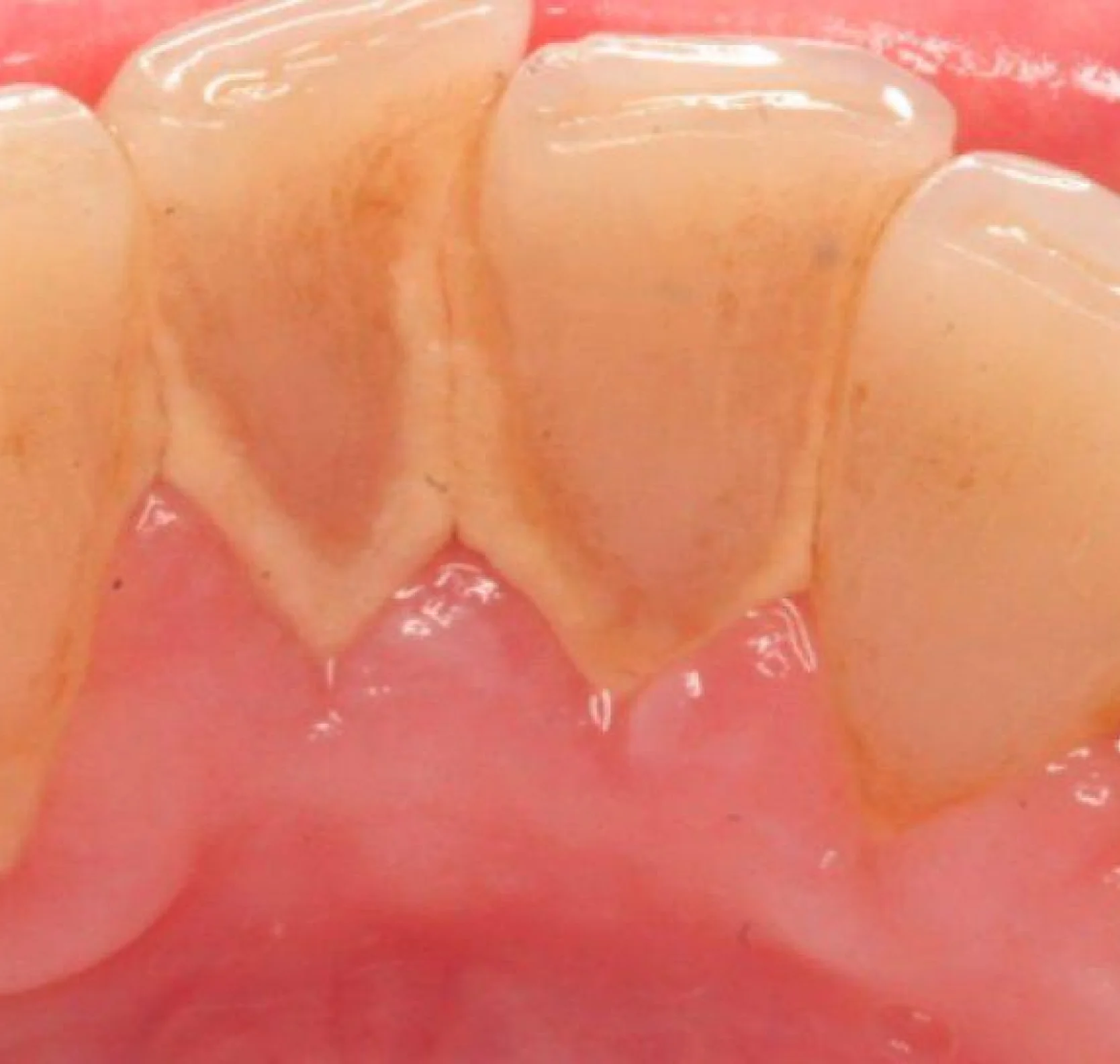

Brushing your teeth twice a day will help you achieve good oral health by removing plaque to keep your gums healthy and your teeth free of cavities.
However, plaque can sometimes remain hidden in places in your mouth that are difficult for a toothbrush to reach, such as between your teeth. If left unchecked, it can turn into tartar which can cause gum disease and other oral problems.
Fortunately, your dentist can help you eliminate it and give you tips to prevent it from happening.
In this article we will explain to you what tartar is, how it forms and how to remove it.
What is tartar?
Tartar, also known as limestone, is the calcified form of dental plaque.
The mouth is covered with bacteria that have different functions. Some of them participate in the process of digesting food and help protect gums and teeth, while others are responsible for cavities and gum disease.
These bacteria fuse with proteins and different types of cells to form a sticky film called plaque that adheres to tooth surfaces.
When this plaque is not properly removed, it mixes with minerals in saliva such as calcium and phosphate. It then solidifies and turns into tartar.
Impact of tartar on oral health
Once tartar has formed, an immune response occurs in your body that leads to inflammation of the gums. This condition, called gum disease or gingivitis, causes gums near tartar to swell and become sensitive and prone to bleeding.
If not treated in time, it progresses to a more serious condition called periodontitis which creates deep pockets between the teeth and gums. These pockets contain more tartar and harmful bacteria that destroy the bone and ligament that supports the teeth, ultimately leading to tooth loss.
The only way to avoid this is to remove the tartar accumulated around the teeth.
How to remove tartar?
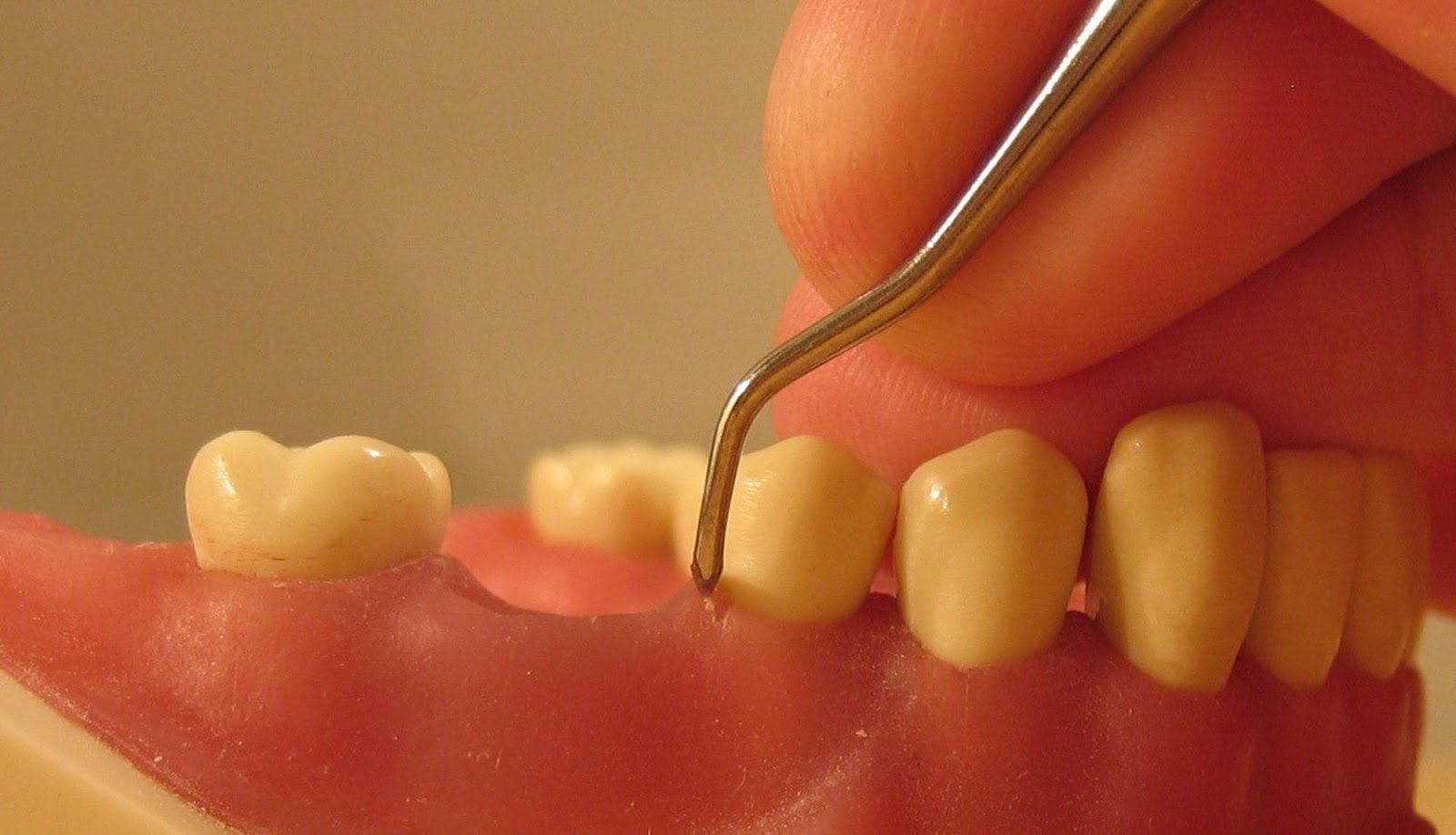
Tartar is a solid compound that is firmly attached to the teeth. Therefore, unlike plaque, which can be easily removed with a toothbrush, tartar can only be removed by professional dental cleaning using special devices and equipment.
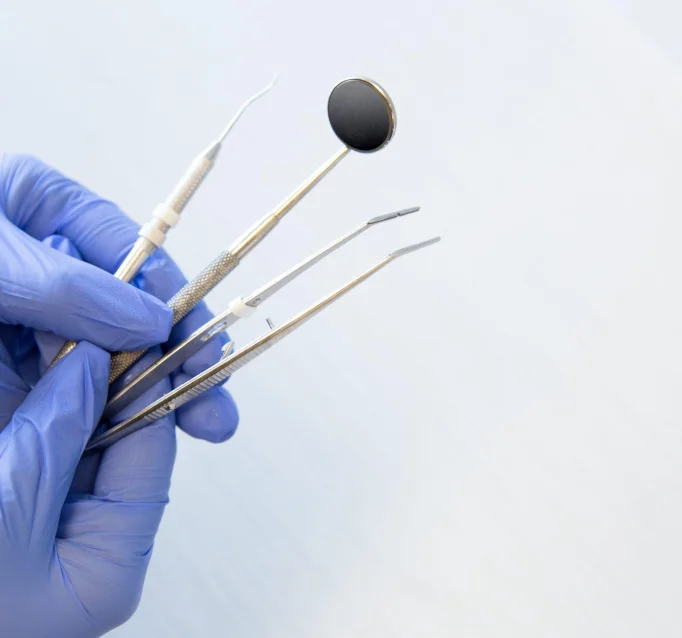
To do this, the dentist may use a manual or ultrasonic scaler, which are tools with a curved blade to grip and loosen tartar. The ultrasonic scaler vibrates at high speed, which helps the dentist remove tartar that is deeply attached to the teeth and does not come off with a manual scaler.
In case of periodontitis, the dentist uses a special scaler which allows him to reach the tartar located in the deep pockets under the gums.
Unfortunately, even if you brush your teeth twice a day and floss, tartar can form in some areas. However, good oral hygiene can significantly reduce the rate at which it forms. It is therefore essential to make periodic appointments with the dentist, as this is the only way to eliminate tartar and maintain healthy gums.
In addition, the dentist can give you tips on how to remove plaque more effectively and explain how to brush your teeth better, to help you achieve a strong and healthy smile.
REFERENCES:
HFDadmin. (2018, April 8). What exactly is dental tartar? Hastings Family Dental. Hastings Family Dental | Providing exceptional dental care since 1997! Accessed December 2, 2021 at https://hastingsfamilydental.c... ;
Newman, T. (2018, January 5). Gingivitis: Causes, symptoms and treatment. Medical News Today. Accessed December 2, 2021 at https://www.medicalnewstoday.c... ;
Parker, H. (2020, August 23). Tartar (dental calculus): 6 tips for eliminating tartar accumulations. WebMD. Accessed December 2, 2021 at https://www.webmd.com/oral-hea... ;
The role oral bacteria play in your mouth. Mountain Aire Dentistry in Broomfield. (2019, April 2). Accessed December 2, 2021 at https://www.broomfielddentists... ;
White, D.J. (1997). Dental calculus: Recent insights into occurrence, formation, prevention, removal and oral health effects of supragingival and subgingival deposits. European Journal of Oral Sciences, 105(5), 508-522. https://doi.org/10.1111/j.1600...
Other articles

Temps de guérison d'un implant dentaire : de la pose à la couronne
Read the article
Implant dentaire ou couronne : comment faire le bon choix?
Read the article
Aligneurs ou broches en orthodontie : lequel choisir?
Read the article
Canadian Dental Care Plan: eligibility, covered services and enrolment
Read the article
Get started today. Pay at your own pace.
With Dentoplan, get a plan adapted to your situation. Rapid approval, directly in the clinic.