Monday · Open until 8 p.m. · Iberville and Saint-Jean
FrançaisHow much do dentures cost in Quebec in 2026?
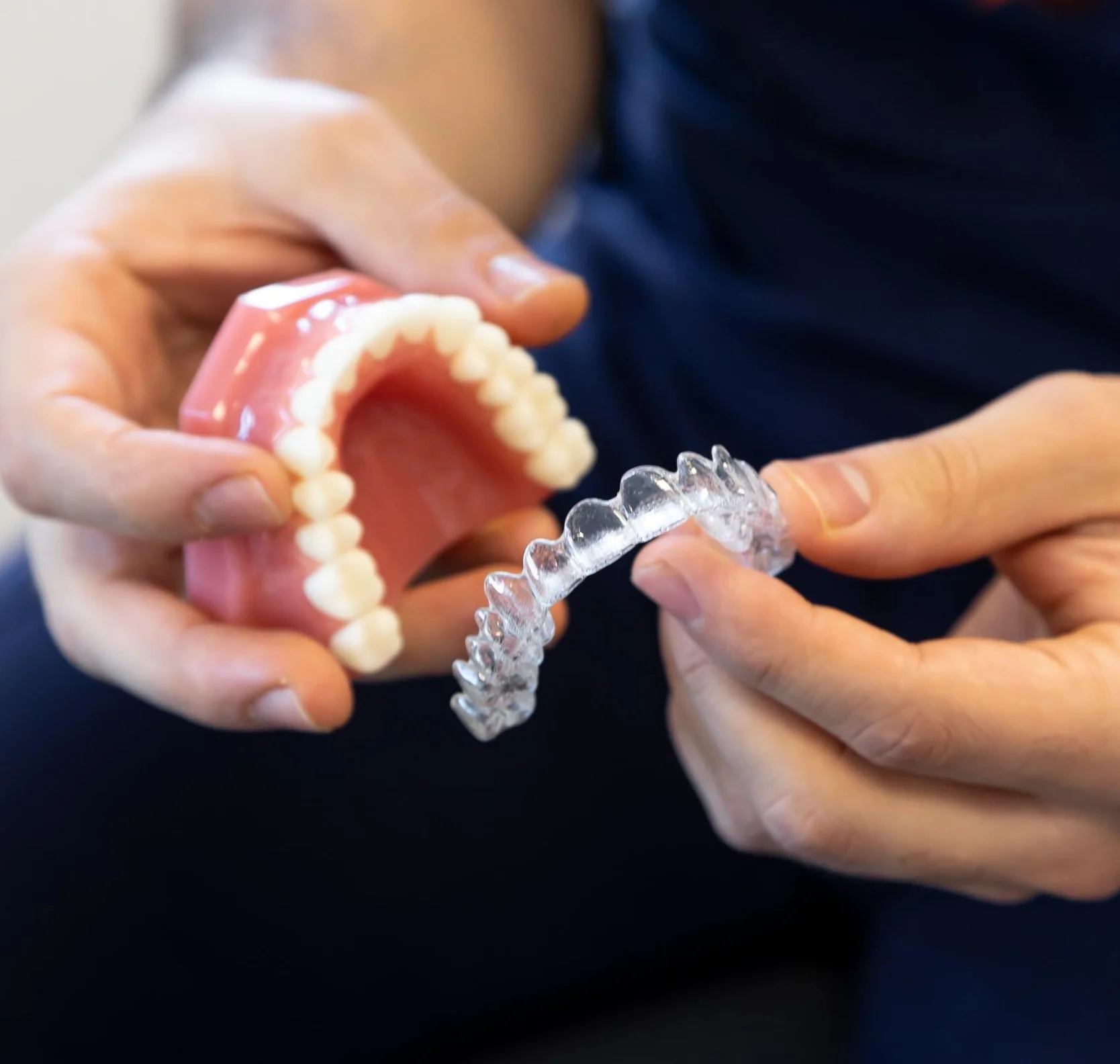

The price of dentures in Quebec in 2026 is between $500 and $30,000, depending on the type of prosthesis chosen. A complete removable denture costs $1,000 to $3,000 per jaw, a partial denture costs $500 to $2,500, and a fixed denture on implants starts at $10,000. The price difference varies depending on the materials, the number of teeth to be replaced and the preliminary treatments required.
With 78% of Quebec seniors wearing dentures ( INSPQ ), the question of average cost affects a large part of the population. The final range depends on the category of prosthesis chosen, the clinical factors specific to each patient and the financing options accessible in Quebec.
Price of dental prostheses by category

The price of a dental prosthesis varies depending on the type chosen and the number of teeth to be replaced. The 3 main categories cover ranges from a few hundred to several thousand dollars. Here's how much each option costs.
Removable prostheses: complete and partial
The removable prosthesis is the most accessible solution to replace missing teeth. It is divided into 2 main categories.
The complete denture ($1,000 to $3,000 per jaw) replaces all the teeth in an arch. Made from acrylic resin, it sits directly on the gums and is the most affordable option for patients who have lost all of their natural teeth.
The partial denture ($500 to $2,500) replaces part of the missing teeth while retaining the remaining natural teeth. Materials vary between acrylic and metal skeletal (stellite), with retaining clasps attached to adjacent teeth.
Both types require adjustment after installation and regular monitoring to adapt the prosthesis to changes in the gums over time.
For whom: patients who have lost several teeth or an entire arch, who are looking for affordable, non-surgical dental care .
Fixed prostheses on implants
The fixed prosthesis on implants offers greater stability than any removable solution. Screwed onto 4 to 6 titanium implants inserted into the jaw, it does not come out and functions like natural teeth on a daily basis. The price is between $10,000 and $30,000 per arch depending on the number of implants required and the complexity of the procedure.
The process includes dental implant surgery followed by a 3-6 month osseointegration period, during which the implants fuse with the bone. A detailed treatment plan is established in advance to plan each step. Chewing, comfort and appearance are comparable to natural teeth, making it the preferred option for replacing permanently missing teeth.
For whom: patients looking for a permanent prosthesis, with sufficient bone density and a suitable budget.
Dental crowns and bridges
A dental crown costs between $800 and $1,500, and a 3-unit bridge costs between $2,500 and $5,000. These fixed prostheses are cemented onto existing teeth (crown) or adjacent abutment teeth (bridge). The choice of materials is partly a matter of aesthetic dentistry : porcelain for a natural finish, zirconia for durability, or metal-ceramic for a balance between the two.
The dental bridge replaces, for example , 1 to 3 missing teeth by relying on neighboring teeth, which makes it an interesting option when adjacent teeth themselves require protection. The crown, once attached, restores the function and appearance of a damaged tooth without replacing it.
For whom: patients with 1 to 3 missing or damaged teeth, who have healthy abutment teeth to support the fixed prosthesis.
The type of prosthesis determines the starting range, but the final price also depends on factors specific to your clinical situation.
What influences the final price of your prostheses?
Several clinical factors influence the price of dentures beyond the chosen category. Fees are not regulated in Quebec , which means that prices can vary from one clinic to another and depending on the professional consulted (dentist or denturist). Making an appointment at 2 or 3 different clinics to compare estimates is generally a good practice before committing.
Materials and laboratory manufacturing
The choice of materials has a direct impact on the price, durability and appearance of the prosthesis. Standard acrylic resin remains the most affordable option for removable dentures, while premium versions offer superior aesthetics and better wear resistance.
For crowns and bridges, porcelain teeth reproduce the natural appearance precisely, while composite is more affordable but less durable over time. Manufacturing in a specialized laboratory adds a variable cost depending on the complexity of the part and the techniques used.
Complexity of the case and preliminary treatments
The number of missing teeth and the condition of your mouth determine the complexity of the case and the treatments necessary before installation. The higher the number of teeth to be replaced, the higher the total cost. It is also necessary to take into account the prior interventions, which are added to the price of the prosthesis:
- Tooth extraction : $150 to $400 per tooth
- Bone grafts : $300 to $800 per site
- Gum treatments : variable depending on severity
- Taking digital impressions : included or extra depending on the clinic
At Votre Dentisterie, Itero 3D technologies and digital radiography allow precise impressions and a detailed diagnosis for patients who have lost teeth and who require an adapted treatment plan.
Once the treatment plan and budget are established, the process follows several concrete steps.
From consultation to delivery: the stages of treatment
The process of fitting a prosthesis includes several stages spread over a few weeks to a few months. From the initial appointment making to the final delivery, each consultation has a specific role. Taking the time to fully understand this process allows you to better plan the treatment and anticipate delays.
Consultation and personalized treatment plan
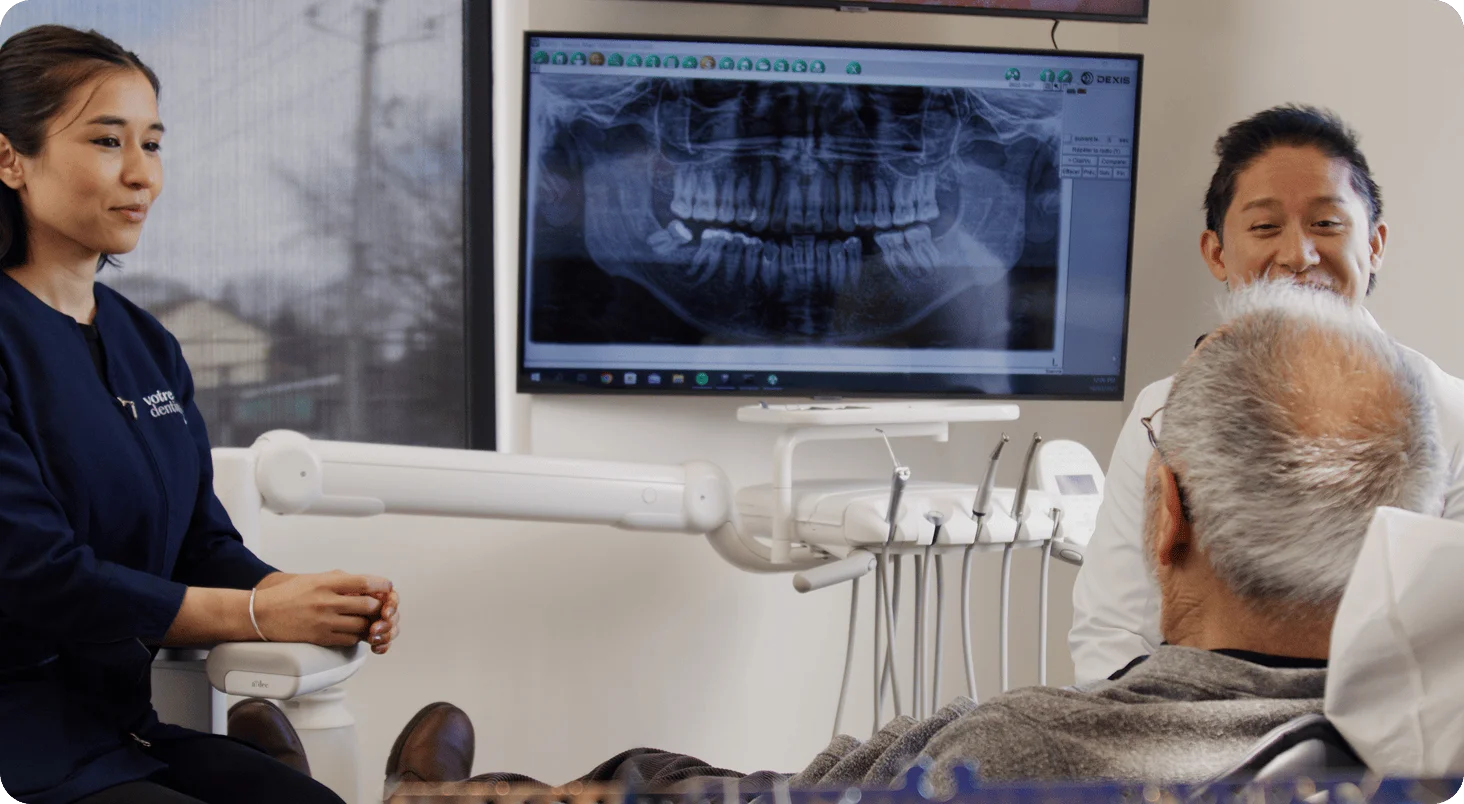
The first step is to see a dentist for a complete dental exam . X-rays, 3D scans and assessment of gum health allow us to establish a precise portrait of your situation. The dentist analyzes the remaining teeth, bone density and your specific needs to determine the most suitable type of prosthesis.
From this diagnosis, a personalized treatment plan is developed with a detailed cost estimate. This plan takes into account each necessary intervention, the deadlines and the number of scheduled appointments. The patient receives all the information before committing, allowing an informed decision to be made in the clinic.
Custom impressions and manufacturing
Taking impressions is the step that determines the precision and comfort of your final prosthesis. This is a mould of your gums and your remaining teeth, made using traditional impressions (paste) or digital impressions (intra-oral scanner). The choice of shade and shape of the artificial teeth is made at this stage to guarantee a natural result.
Manufacturing in a specialized laboratory generally takes 2 to 4 weeks . If the case requires it, an immediate (temporary) prosthesis can be placed while waiting for the final version, which avoids remaining without teeth during the manufacturing period.
Delivery and adjustments of the prosthesis
The prosthesis is delivered during an appointment dedicated to fitting and adjustments. The dentist checks the occlusion, comfort and appearance, then makes any necessary modifications to ensure the denture fits perfectly in the patient's mouth.
An adaptation period of 2 to 4 weeks is normal. Chewing , speech, and comfort gradually improve as the tissues adapt. If further adjustment is necessary, a follow-up appointment allows areas of discomfort to be corrected according to the patient's needs.
However, the total cost of treatment can be reduced through several coverage programs and financing options.
Reduce the cost of your prostheses: RAMQ, CDCP and financing
In Quebec, 94% of dental expenses are covered by the private sector ( MSSS ), which makes the cost of prostheses particularly heavy for patients without insurance. Several public plans and financing options help alleviate this burden. Considering these resources up front helps you plan your budget better.
Public programs: RAMQ and CDCP
RAMQ covers complete and partial acrylic dentures for social assistance recipients for 12 months or more. The plan provides for replacement after 8 years, reupholstering every 5 years, and 50% coverage in the event of loss or damage. These conditions are strict, but they allow eligible patients to obtain a prosthesis without direct cost to the covered party.
The Canadian Dental Care Plan (CDSP) covers part of the costs for Canadian residents without private insurance whose family income is less than $90,000. Votre Dentisterie accepts CDCP, which facilitates access to treatment for patients who need it. A detailed treatment plan is required to submit the application for coverage.
Private insurance and Flexiti financing
Group insurance plans generally cover between 50% and 60% of the cost of dentures. Before starting treatment, check your annual maximum and request a pre-treatment estimate from your insurer to find out the exact amount reimbursed.
For patients without insurance or with insufficient coverage, Votre Dentisterie offers Flexiti financing at 0% interest . This option allows the cost of treatment to be spread over several months without additional costs, making prostheses accessible regardless of your financial situation.
Contact our team at 450-305-6505 to discuss financing options tailored to your situation.
Funding makes it easier to access prostheses, and patients who already wear prostheses need to know when to replace or adjust them.
When should an existing prosthesis be replaced or adjusted?
In Canada, 22% of people aged 60 to 79 are edentulous ( ADC ), meaning that a large number of patients wear dentures on a daily basis. Over time, these dentures lose their fit and compromise oral health. Knowing when to invest in a new prosthesis or adjust the one you wear meets a concrete need in all cases.
Signs that a denture needs to be replaced
There are several signs that a denture needs to be replaced or readjusted. The most common:
- Persistent discomfort or gum pain
- Excessive mobility of the prosthesis
- Difficulty chewing or speaking
- Visible wear, cracks or discolouration
- Frequent irritation of oral tissues
An ill-fitting prosthesis can cause chronic irritation of the gums and affect the patient's nutrition in the medium term. Consulting as soon as these symptoms appear prevents the situation from deteriorating.
Lifespan and relining of prostheses
The lifespan of a prosthesis varies depending on the type and maintenance. Removable full and partial dentures generally last 5 to 10 years. Relining is recommended every 5 years to adapt the denture base to changes in the jaw and gums, extending its life without requiring complete replacement.
Implant-supported fixed dentures offer superior durability, with a lifespan of 10 to 20 years+ when properly maintained. Annual check-ups make it possible to check the condition of the implants and prosthesis. Rigorous daily maintenance (brushing, flossing) remains the best way to maximize the longevity of your investment.
Plan your prostheses at Votre Dentisterie
The price of dental prostheses varies depending on your case, but each patient deserves a solution adapted to their teeth and their budget to regain a natural smile. Votre Dentisterie offers personalized support in our 2 clinics in Saint-Jean-sur-Richelieu (Iberville and Saint-Jean), with evening hours, 0% Flexiti financing and acceptance of the CDCP, all in a non-judgmental approach.
Make an appointment at 450-305-6505 or online to obtain your treatment plan and a detailed estimate.
Frequently asked questions about the price of dentures
Denture or fixed prosthesis on implants: how to choose?
Dentures (removable complete dentures) are the most affordable option ($1,000 to $3,000 per jaw), while fixed implant-supported dentures ($10,000 to $30,000) provide superior stability and comfort for chewing. To make the best choice, consider your budget, your bone density and your specific needs.
How many appointments are needed for a dental prosthesis?
For a removable prosthesis, you must make 3 to 5 appointments over 3 to 6 weeks, from the impression to the final installation. A complete prosthesis on implants requires 4 to 8 appointments over 3 to 6 months, including the osseointegration period.
Can you sleep with a removable prosthesis?
Removing removable dentures at night is recommended to allow gums to rest and prevent infections. Soaking in a cleaning solution is necessary to maintain the hygiene of the denture.
Are implant-supported dentures permanent?
Fixed prostheses on implants are permanently screwed in and cannot be removed. Their superior lifespan (10 to 20 years+) and their function comparable to natural teeth make them a durable solution with standard daily maintenance: brushing and flossing.
Is financing available for dentures?
Votre Dentisterie offers Flexiti financing at 0% interest and accepts CDCP for eligible patients. Also check your private insurance coverage, for example by requesting a pre-treatment plan from your insurer.
How to maintain a dental prosthesis on a daily basis?
Removable dentures should be removed at night, brushed with a mild cleanser and soaked in an antibacterial solution. Fixed prostheses on implants are maintained like natural teeth, with regular brushing and flossing.
Other articles

Temps de guérison d'un implant dentaire : de la pose à la couronne
Read the article
Implant dentaire ou couronne : comment faire le bon choix?
Read the article
Aligneurs ou broches en orthodontie : lequel choisir?
Read the article
Canadian Dental Care Plan: eligibility, covered services and enrolment
Read the article
Get started today. Pay at your own pace.
With Dentoplan, get a plan adapted to your situation. Rapid approval, directly in the clinic.