Monday · Open until 8 p.m. · Iberville and Saint-Jean
FrançaisTeeth grinding and its consequences


Nowadays, it is common to find that more and more people suffer from bruxism or teeth grinding. The reason is its close relationship with certain factors such as stress and malocclusion.
This disorder is mainly associated with adults. However, children are not exempt from this problem, which can affect anyone.
Additionally, although teeth grinding may seem harmless, it can cause serious damage to teeth and other oral tissues.
In this article, we will explain to you what teeth grinding is, its consequences and how to treat it.
What is teeth grinding?
Bruxism, commonly known as teeth grinding, is a condition characterized by involuntary clenching and grinding of the teeth that can lead to damage to oral tissues. This condition usually occurs at night, during sleep.
Like other medical conditions, its severity can vary from patient to patient, and it is accompanied by a wide range of symptoms.
It can be divided into two types:
- Awake teeth grinding: it occurs when you are awake, usually when you are under pressure or stressed.
- Grinding of teeth during sleep: it occurs during sleeping hours. It often occurs during light sleep phases.
Why are you grinding your teeth?
It is essential to understand that teeth grinding is a symptom of other illnesses or conditions. Therefore, multiple factors can lead to the development of teeth grinding.
Furthermore, its main causes are malocclusion or dental interference, problems related to brain neurotransmitters, and most commonly, mental health problems such as stress and anxiety.
Unfortunately, these conditions can trigger an involuntary response that results in nonfunctional squealing.
Consequences of teeth grinding
The damage caused by teeth grinding is directly related to the severity of the condition. In early, mild cases, there may be no damage or just slight wear to the teeth.
However, chronic grinding and severe cases can lead to other problems, such as:
- Severe tooth wear
- Receding gums
- Loosening and loss of teeth
- Dental fracture
- Headaches
- Sore jaw or pain around it after waking up
- TMD (temporomandibular joint disorder)
How to treat and prevent teeth grinding?
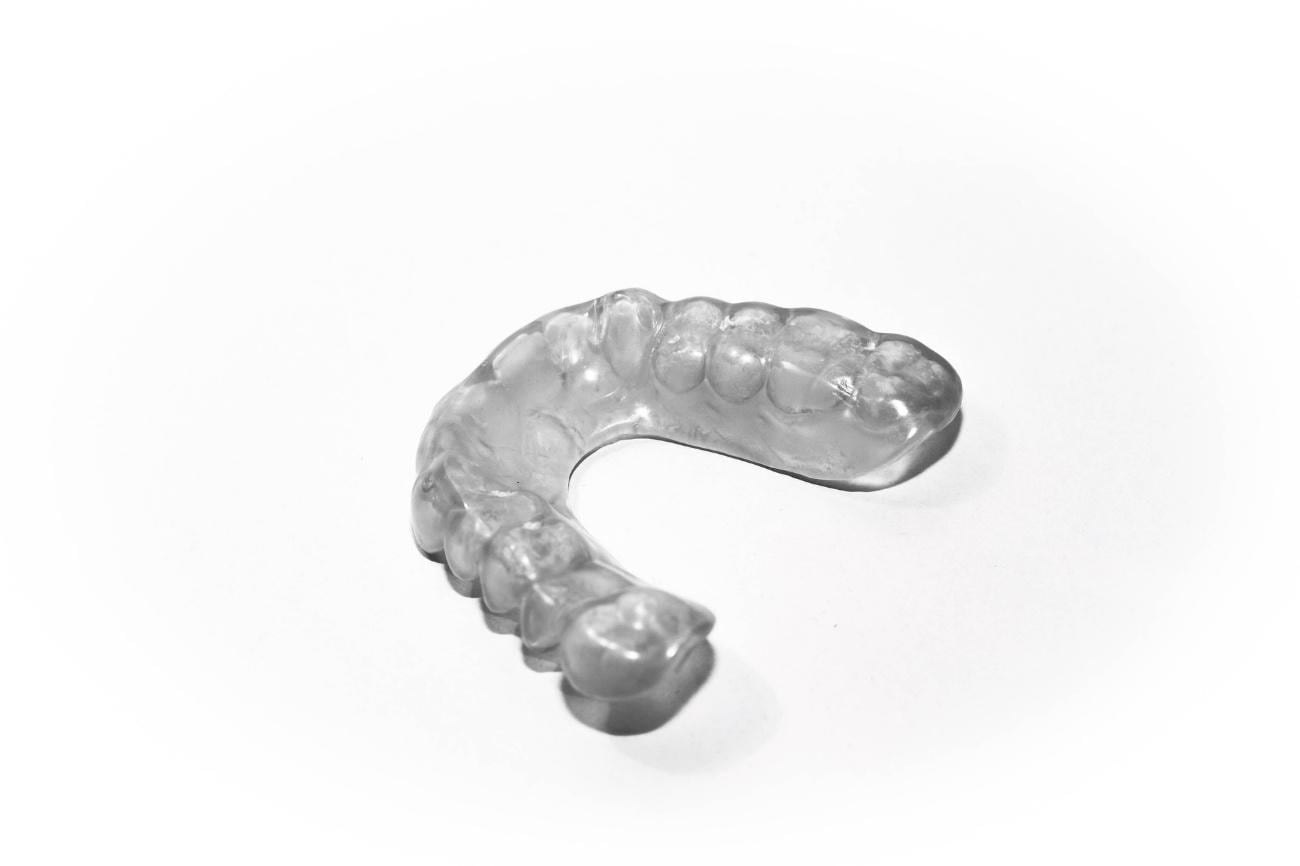
Your dentist can make a custom mouthguard or splint for you to wear at night while you sleep.
This splint protects your mouth by guiding jaw movement to minimize gum damage and tooth wear. Therefore, it relieves the pressure applied during grinding and prevents muscle pain. However, it only reduces the damage caused by teeth grinding without treating the origin.
Since teeth grinding is a symptom, the only way to eliminate it is to treat the underlying cause. In addition, since stress is usually the main cause, certain measures, such as attending stress counselling sessions, physical exercise, meditation and adjusting your diet, can help you relieve and prevent teeth grinding.
Teeth grinding is a serious condition that affects thousands of people worldwide and, if left untreated, can cause significant damage and discomfort.
Although the reason for this isn't always related to your teeth, a visit to your dentist can put you on the right path to stopping and preventing this problem. In addition, he can make a custom splint that will make you feel better immediately, protecting your teeth and alleviating the discomfort caused.
REFERENCES :
Frisbee, E. (2021, July 21). Teeth grinding (bruxism): Causes and treatments. WebMD. Accessed December 9, 2021 at https://www.webmd.com/oral-hea... ;
NHS. (2020, May 4). Grinding of teeth (bruxism). NHS choices. Accessed December 9, 2021 at https://www.nhs.uk/conditions/... ;
Shetty, S., Pitti, V., Satish Babu, CL, Surendra Kumar, GP, & ; Deepthi, B.C. (2010). Bruxism: A literature review. The Journal of Indian Prosthodontic Society, 10(3), 141-148. https://doi.org/10.1007/s13191... ;
Suni, E. (2021, November 29). Bruxism: grinding of teeth at night. Sleep Foundation. Accessed December 9, 2021 at https://www.sleepfoundation.or... ;
Whelan, C. (2020, July 8). How to stop grinding your teeth night and day. Healthline. Accessed December 9, 2021 at https://www.healthline.com/hea... ;
Other articles

Temps de guérison d'un implant dentaire : de la pose à la couronne
Read the article
Implant dentaire ou couronne : comment faire le bon choix?
Read the article
Aligneurs ou broches en orthodontie : lequel choisir?
Read the article
Canadian Dental Care Plan: eligibility, covered services and enrolment
Read the article
Get started today. Pay at your own pace.
With Dentoplan, get a plan adapted to your situation. Rapid approval, directly in the clinic.